

Wisconsin Whitetail Rut Dates & Deer Movement
Wisconsin's rut peaks from late October into early November. A DNR study in the southwest tracked 188 GPS-collared bucks from 2017 to 2020 and measured peak breeding at October 23 to November 12, with buck movement topping out November 4 to 8 every year. The DNR puts the height of the rut statewide at the last week of October through mid-November.
Rut windows by region
Statewide
Oct 25 to Nov 15
Peak: late October into early November
The DNR puts the height of the rut at the last week of October through mid-November.
Southwest Wisconsin
Oct 23 to Nov 12
Peak: buck movement Nov 4 to 8
Measured by a DNR study of 188 GPS-collared bucks in parts of Dane, Iowa and Grant counties, 2017 to 2020.
Regional estimates, and your area can vary. Where these dates come from is below.
2026 season: archery opens mid September. Source: Wisconsin season dates (Wisconsin DNR). Seasons and zones change, so confirm with the agency before you hunt.
Where do the Wisconsin rut dates come from?
In parts of Dane, Iowa and Grant counties, a Wisconsin DNR study tracked 188 GPS-collared bucks over four falls, 2017 to 2020, and dated conception by counting back 200 days from the births of 307 fawns. Buck movement and conception dates closely matched: peak breeding ran October 23 to November 12, and buck movement topped out November 4 to 8 every year. Neither temperature nor the hunting season changed buck movement.
The southwest card is that measured window. Statewide, an analysis of the DNR's Snapshot Wisconsin trail camera photos found antlered deer showed up most in the same week each year from 2019 to 2021, late October or early November depending on the year, and the DNR puts the height of the rut at the last week of October through mid-November, which the statewide card follows.
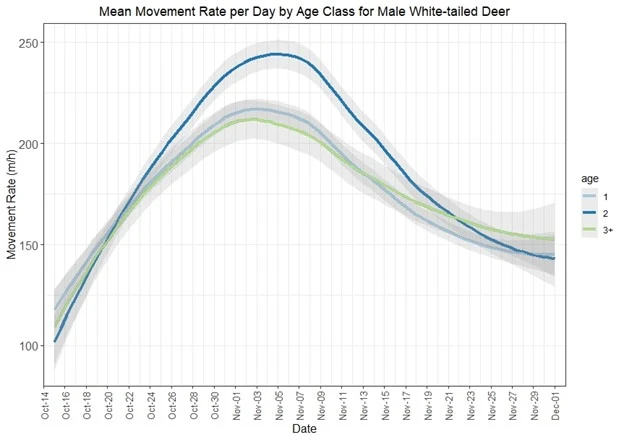
Sources: Hunsaker and others, The Breeding Season and Movement Ecology of Male White-Tailed Deer in Southwest Wisconsin, Ecology and Evolution (2025); Wisconsin DNR Field Notes, December 2023, buck movement ecology during the rut; Wisconsin DNR Field Notes, March 2026; Wisconsin DNR Snapshot Wisconsin newsletter, February 2024.
How do the 2026 seasons in Wisconsin line up with the rut?
Wisconsin's 2026 to 2027 deer seasons, statewide unless noted:
- Archery and crossbow: September 12 to January 3 (January 31 in metro subunits and 42 counties)
- Youth and disabled gun hunt: October 10 to 11
- Nine-day gun season: November 21 to 29
- Muzzleloader: November 30 to December 9
- Antlerless-only hunt: December 10 to 13
- Antlerless-only holiday hunt: December 24 to January 1, in 48 farmland zone counties
The whole measured peak falls in archery and crossbow season. By the November 21 gun opener, bucks are already moving less. The date can matter: when the opener moved from November 17 in 2018 to November 23 in 2019, buck harvest in Iowa County fell 25 percent.
Sources: Wisconsin DNR, Wisconsin Hunting Regulations, Fall 2026 to Spring 2027, deer section; Wisconsin DNR, Wisconsin Hunting Regulations, Fall 2026 to Spring 2027, deer section (page 2); Wisconsin DNR, Deer Fall Forecast 2026; Hunsaker and others, The Breeding Season and Movement Ecology of Male White-Tailed Deer in Southwest Wisconsin, Ecology and Evolution (2025); Wisconsin DNR Field Notes, December 2023, buck movement ecology during the rut.
How many deer do Wisconsin hunters take?
Wisconsin hunters registered about 345,000 deer in the 2025 season, about 166,000 bucks and 179,000 antlerless deer, up from about 327,000 in 2024. The nine-day gun season alone accounted for about 182,000 in the DNR's preliminary count, about 86,000 of them antlered.
Sources: Wisconsin DNR Deer Metrics System, total deer harvest history, statewide; Wisconsin DNR news release, 2025 preliminary gun deer hunt license sales and harvest totals.
Where is the public ground in Wisconsin?
Wisconsin has more than seven million acres open to public hunting. County forests are the largest public holding, more than 2.4 million acres in 30 counties, and every state wildlife area is open to hunting. The Voluntary Public Access program adds more than 30,000 acres of private land you can hunt without asking permission.
On DNR land south of State Highway 64, stands and blinds can stay up only from an hour before to an hour after shooting hours each day. North of it, you can leave up to two portable stands or blinds per county overnight from September 1 to January 31. Screw-in stands are not allowed.
Sources: Wisconsin DNR, deer hunting; Wisconsin DNR, county forests; Wisconsin DNR, state wildlife areas listed by county; Wisconsin DNR, Wisconsin Hunting Regulations, Fall 2026 to Spring 2027, DNR-managed lands.
Which Wisconsin rules change a rut hunt?
- A buck is any deer with an antler at least three inches long. A gun license and an archery or crossbow license each come with one buck tag good statewide.
- Baiting and feeding are banned in many counties, and bans renew with each new CWD or TB detection, so check the DNR's map before you hunt. Where legal, the cap is two gallons per 40 acres, or two gallons on a smaller parcel.
- Attractant scents are legal statewide if deer cannot eat them, and any scent over two ounces has to come out at the end of shooting hours each day.
- Crossbows have been legal for all hunters since 2013, on their own license. To hunt with both a bow and a crossbow, you need the upgrade.
- During any firearm deer season, every hunter except waterfowl hunters, bowhunters included, needs at least 50 percent blaze orange or fluorescent pink on outer clothing above the waist.
- CWD was first found in Wisconsin's wild deer in 2002 and is now endemic in southern Wisconsin. Whole carcasses and some parts from states and provinces with CWD in the wild can come in only if taken to a licensed meat processor or permitted taxidermist within 72 hours.
Sources: Wisconsin DNR, Wisconsin Hunting Regulations, Fall 2026 to Spring 2027, deer section; Wisconsin DNR, Wisconsin Hunting Regulations, Fall 2026 to Spring 2027, deer section (page 2); Wisconsin DNR, Wisconsin Hunting Regulations, Fall 2026 to Spring 2027, general section; Wisconsin DNR, Wisconsin Hunting Regulations, Fall 2026 to Spring 2027, highly visible clothing; Wisconsin DNR, baiting and feeding regulations; Wisconsin DNR news release, late season deer opportunities (December 2025); Wisconsin DNR Field Notes, March 2026; Wisconsin DNR, chronic wasting disease; Wisconsin DNR, CWD prevalence in Wisconsin; Wisconsin DNR, carcass movement, processing and disposal.
Checked against the linked sources on September 30, 2026. Seasons and rules change every year, so confirm with the agency before you hunt.
From the Wisconsin calendar to your next sit
The calendar says when the rut runs in Wisconsin. Whether your next sit is worth your best spot comes down to the ground you hunt and what you've seen on it, and that is the call RackIQ makes: The Scored Call™, checked afterward. The more hunts you log, the sharper it gets.
Free to start.
Common questions
When is the rut in Wisconsin?
From late October into mid-November. A DNR study in the southwest measured peak breeding at October 23 to November 12, and buck movement peaked November 4 to 8 in each of its four years.
Does the rut vary across Wisconsin?
The DNR's measured dates come from the southwest. Statewide, its Snapshot Wisconsin trail cameras caught the most antlered deer in late October or early November each year, and the DNR has not published a north to south split.
Do cold fronts trigger the Wisconsin rut?
Not in the DNR study. Temperature and the hunting season did not change buck movement there; only the calendar date and the buck's age did.
Keep reading
Rut dates for other states: Indiana · Pennsylvania · Texas · Minnesota · or see every state.
On what moves deer once you are out there: The Rut Clock, The 48-Hour Window, and the rest of Field Notes.